Helmet Design: Using Hexagonal Grids to Define Protective Mesh
May 6
2 min read
A sketch usually starts with a rhythm. You find the silhouette of the helmet, map out the vents, and define the primary volumes. Everything is moving fast until you hit the material details.
The moment you start drawing individual mesh cells, the momentum stops. You move from designing a form to performing a repetitive manual task.
The trap of the tiny cell
Protective gear like helmets relies on mesh for airflow and safety. These patterns are dense. When you try to draw a hexagonal mesh by hand, the spacing shifts. The cells at the start of the vent look different from the cells at the end.
This inconsistency draws the eye for the wrong reasons. Instead of looking at the aerodynamics of the helmet, the viewer looks at the shaky linework of the pattern. You end up overworking the sketch to fix it, which kills the energy of the original idea.
Dropping in the Hexagonal Grid
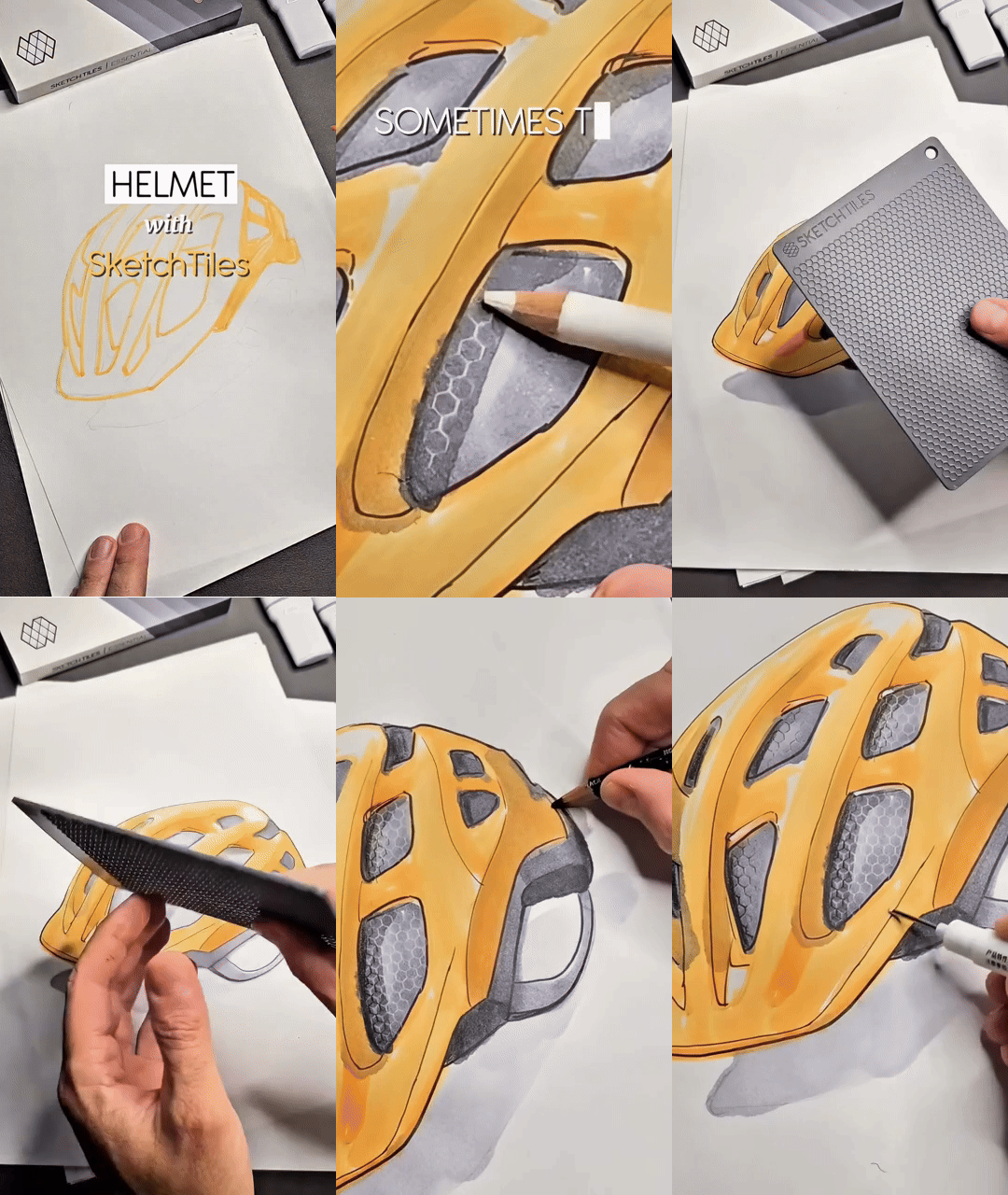
The goal isn't to draw every cell. The goal is to communicate "mesh" as efficiently as possible. This is where the Hexagonal Grid tile becomes a tool for speed.
By sliding the tile under your paper, you establish a rigid structural guide immediately. You aren't guessing where the next cell goes. You trace the texture into the specific vent areas, and the pattern remains perfectly consistent across the entire form.
Suggestion over precision
A believable sketch doesn't need a 1:1 replica of a manufactured part. It needs a suggestion of material reality. The Hexagonal Grid provides the mathematical "truth" that the human eye expects from a technical material.
Because the tile handles the repetition, your hand can stay loose. You can fade the texture out near the edges of a curve or leave it denser in the shadows. You control the expression while the tile handles the geometry.
Where to use this
• Speaker grilles and acoustic covers.
• High-performance footwear cooling panels.
• Automotive intake vents and honeycombed grilles.
• Non-slip industrial flooring or grip tape.
• Protective padding on tactical or sports gear.
• Anywhere a repeated pattern defines the material.
Try this in your next sketch
How does the scale of your mesh pattern change the perceived weight or breathability of the product?
What are SketchTiles
SketchTiles are physical texture stencils built for designers, by designers. Place a tile under your page, trace with any pencil or marker, and the pattern transfers onto your sketch. Each set includes four double-sided tiles, etched with eight precise patterns: Diagonal Lines, Crosshatch, Isometric Dot Grid, and Hexagonal Grid.
SketchTiles are available as The Essentials Set and the Essentials Complete Set. Shop on Amazon.




Comments