Using Dot Grid Textures to Define Air Intake on a Hairdryer
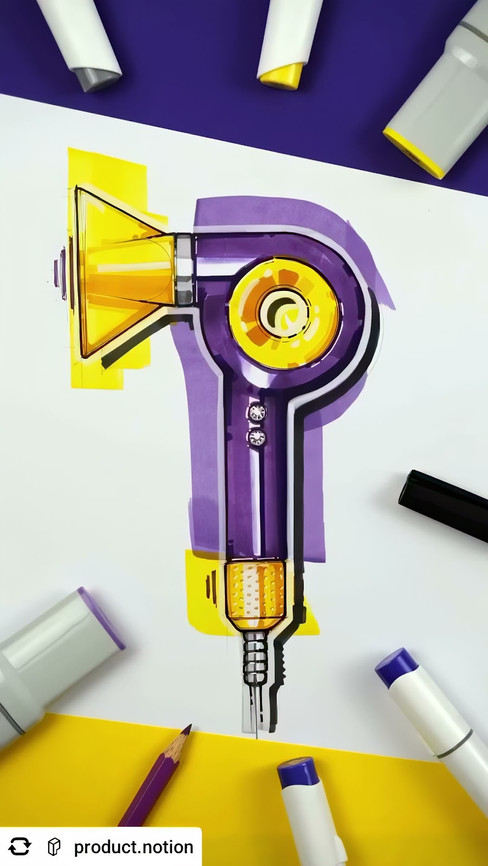
Drawing a hairdryer is mostly about managing compound curves and airflow. The intake vent is the most technical part of the visual. If you hand-draw those holes, they usually end up wobbly.
It ruins the illusion of a manufactured product. When the spacing is off by even a millimeter, the sketch looks amateur. You lose the sense of precision that industrial design requires.
Why Hand-Drawn Vents Kill the Realism
Consistency is the hardest part of a perforated surface. On a curved object like a hairdryer, your eye expects the pattern to follow the form. If you try to dot each hole individually, your hand gets tired.
Your focus drifts. The dots start to clump together or drift apart. This lack of rhythm tells the viewer the object is "drawn" rather than "engineered." It breaks the immersion of the design.
Mapping the Intake with Dot Grid Tiles
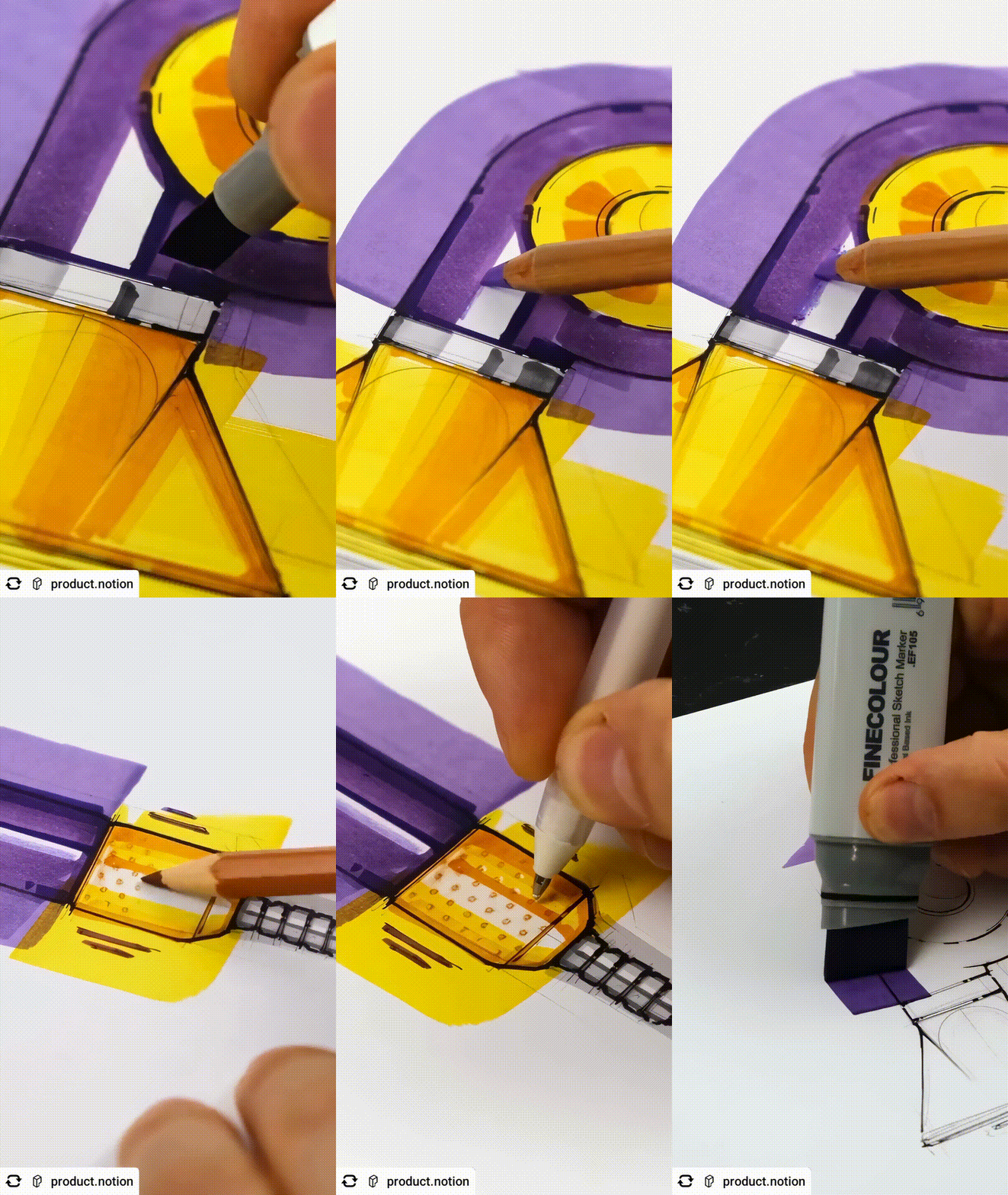
Instead of fighting the pen, use a dot grid tile under the page. This allows you to ghost in the intake area first. You define the boundary of the vent on the hairdryer’s housing.
Once the boundary is set, you rub the pen over the tile. The dot grid provides an instant, perfectly spaced matrix of holes. You aren't guessing where the next hole goes. You are simply revealing a pre-existing technical pattern.
Uniformity Communicates Engineering Intent
In industrial design, a clean pattern signals a finished product. The dot grid isn't just decoration. It represents functionality—specifically, how air enters the motor.
When the dots are perfectly aligned, the sketch feels heavy and intentional. It shows that you’ve considered the manufacturing constraints of a plastic mesh or a metal filter. The texture does the heavy lifting of explaining the material.
Where to use this
• Speaker grilles on consumer electronics.
• Non-slip grip patterns on power tool handles.
• Perforated leather on automotive seating.
• Ventilation ports on laptop chassis.
• Filter screens for kitchen appliances.
• Anywhere a repeated pattern defines the material.
Try this in your next sketch
How would your housing design change if the ventilation pattern followed a strict geometric grid instead of a random cluster?
What are SketchTiles
SketchTiles are physical texture stencils that slip under your paper. Press and draw - the texture appears instantly. No freehand hatching, no rulers, no guesswork. Each tile produces a different pattern: crosshatch, diagonal lines, dot grid, and hexagonal. They work with any pen, pencil, or marker on standard paper.
SketchTiles are available as The Essentials Set and the Essentials Complete Set. Shop on Amazon.




Comments