The hardest part of sketching Philippe Starck’s LaCie Blade Runner isn't the organic "liquid" core. It is the cage. The design relies entirely on a series of perfectly spaced, parallel fins.
If one fin is slightly tilted or the spacing drifts by a millimeter, the sketch stops looking like a premium tech product. It starts looking like a broken radiator.
The trap of the repetitive parallel
When you draw forty parallel lines by hand, your brain gets tired. Your hand starts to "cheat" the angle to finish faster.
In industrial design, rhythm is everything. On the Blade Runner, those fins create the silhouette. Any inconsistency in the line weight or the gap between them destroys the illusion of a solid, machined object.
Locking in the rhythm with Diagonal Lines
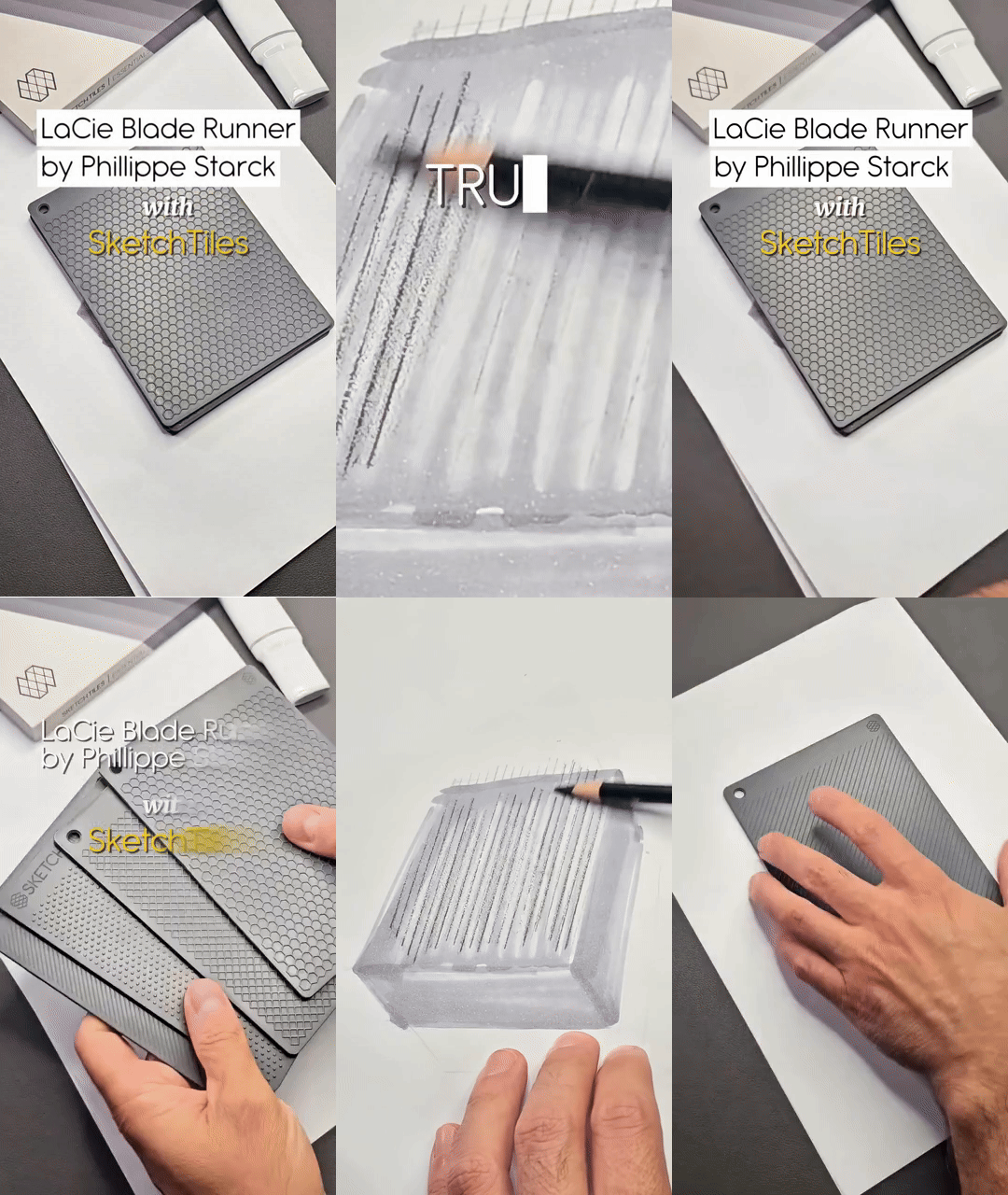
The Diagonal Lines Tile removes the cognitive load of measuring. You aren't worrying about the distance between line A and line B.
By placing the tile under the page, the spacing is already dictated. You can focus entirely on the pressure of your pen and how the light hits the edges of the fins. It turns a tedious measuring task into a purely creative exercise.
Why consistent angles define form
The Blade Runner is about the contrast between the rigid exterior and the fluid interior. The exterior fins must be razor-sharp.
Using a physical guide ensures that the "shadow side" of every fin matches perfectly. This consistency allows the viewer’s eye to glide over the texture and focus on the overall form, rather than getting stuck on a drafting error.
Where to use this
Use the Diagonal Lines tile for heat sinks on high-end electronics. It works for architectural louvers on building facades.
Apply it to server rack vents or automotive radiator grilles. Use it for ribbed grip patterns on heavy machinery. Anywhere a repeated pattern defines the material.
Try this in your next sketch
How does the rhythm of a texture change the perceived value of the object you are drawing?
What are SketchTiles
SketchTiles are physical texture stencils built for designers, by designers. Place a tile under your page, trace with any pencil or marker, and the pattern transfers onto your sketch. Each set includes four double-sided tiles, etched with eight precise patterns: Diagonal Lines, Crosshatch, Isometric Dot Grid, and Hexagonal Grid.
SketchTiles are available as The Essentials Set and the Essentials Complete Set. Shop on Amazon.
SketchTiles are physical texture stencils built for designers, by designers. Place a tile under your page, trace with any pencil or marker, and the pattern transfers onto your sketch. Each set includes four double-sided tiles, etched with eight precise patterns: Diagonal Lines, Crosshatch, Isometric Dot Grid, and Hexagonal Grid.
SketchTiles are available as The Essentials Set and the Essentials Complete Set. Shop on Amazon.




Comments