The Vitra x RIMOWA stool is a study in industrial precision. It takes the iconic grooved language of a suitcase and applies it to a functional piece of furniture.
For a designer, the challenge isn't the silhouette. It is the texture. If the grooves are slightly off, the material looks like flimsy plastic rather than rigid, cold-rolled aluminum.
The trap of the uneven groove
When you draw corrugated surfaces by hand, your spacing naturally drifts. You might start with tight, 2mm gaps at the top, but by the time you reach the bottom, they have widened to 3mm.
This inconsistency kills the "industrial" feel. In the real world, these grooves are formed by heavy machinery. They are mathematically perfect. A sketch that lacks this rhythm fails to communicate the manufacturing quality of the product.
Locking in the frequency with Diagonal Lines
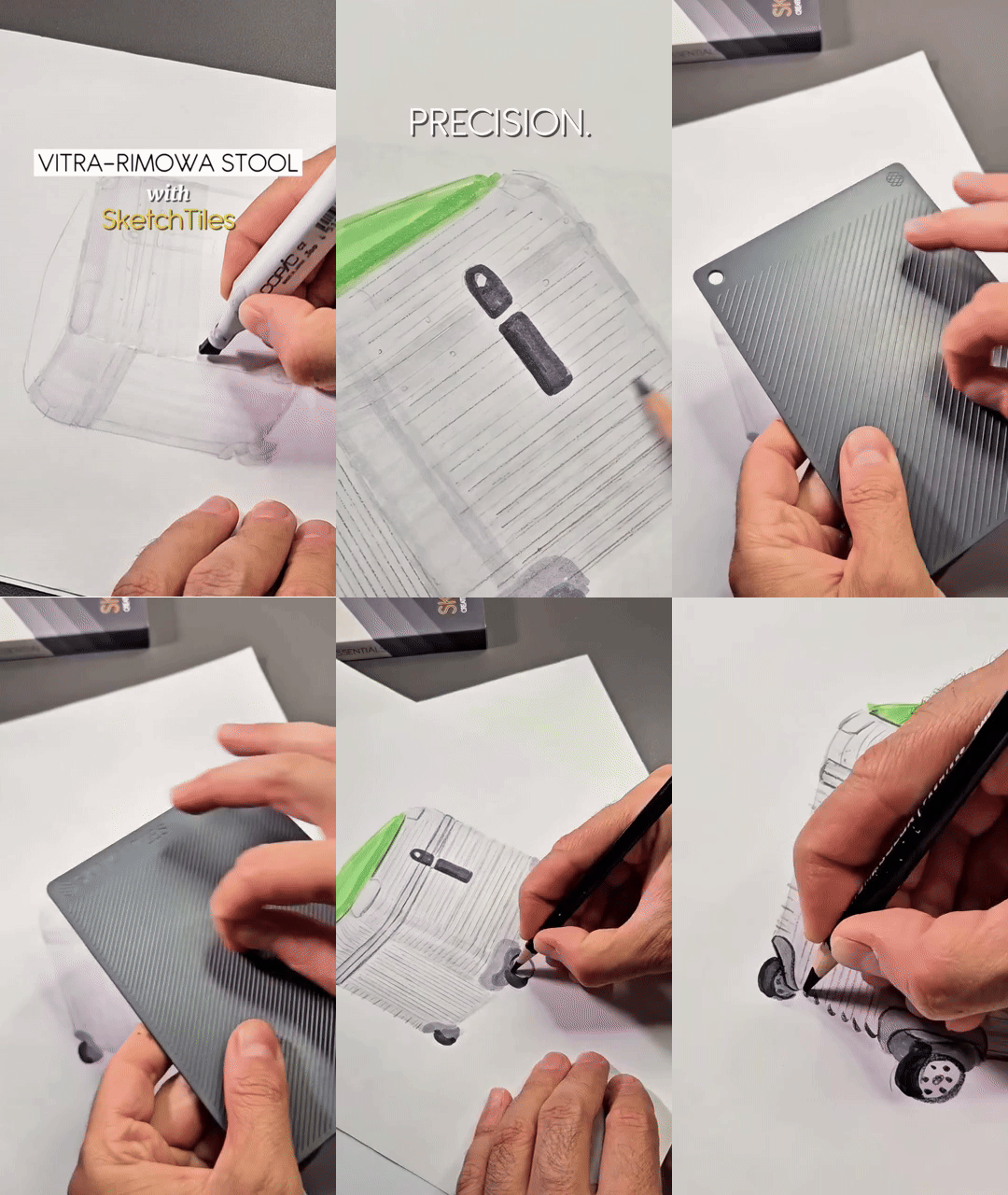
We used the Diagonal Lines tile to set the base frequency of the aluminum shell. Instead of guessing the distance between each ridge, the stencil provides a fixed guide.
By placing the tile under the paper, we can trace the grooves with total confidence. The pattern stays locked in across the entire surface of the stool, ensuring the perspective remains grounded and the material looks intentional.
Consistency communicates material weight
In industrial design, the quality of a product is often judged by its tolerances. A sketch with perfectly spaced grooves communicates high-end manufacturing.
When the lines are clean and the spacing is accurate, the viewer perceives the material as heavy, durable, and expensive. It shifts the focus from the "drawing" to the "object."
Where to use this
This technique isn't limited to furniture or luggage. Use it for heat sinks on electronics, radiator fins on automotive parts, architectural siding, shipping containers, and high-end toolboxes. Anywhere a repeated pattern defines the material.
Try this in your next sketch
How does the weight of your line change when you transition from the highlight of a groove to the shadow?
What are SketchTiles
SketchTiles are physical texture stencils built for designers, by designers. Place a tile under your page, trace with any pencil or marker, and the pattern transfers onto your sketch. Each set includes four double-sided tiles, etched with eight precise patterns: Diagonal Lines, Crosshatch, Isometric Dot Grid, and Hexagonal Grid.
SketchTiles are available as The Essentials Set and the Essentials Complete Set. Shop on Amazon.
"SketchTiles are physical texture stencils built for designers, by designers. Place a tile under your page, trace with any pencil or marker, and the pattern transfers onto your sketch. Each set includes four double-sided tiles, etched with eight precise patterns: Diagonal Lines, Crosshatch, Isometric Dot Grid, and Hexagonal Grid."
"SketchTiles are available as The Essentials Set and the Essentials Complete Set. Shop on Amazon.






Comments