The moment you start drawing wood grain, the sketch usually grinds to a halt. You stop thinking about the ergonomics of the handle and start worrying about the spacing of parallel lines. Your flow breaks. The design suffers because your brain switched from "creator" to "printer."
The trap of the organic grip
A wooden handle on a garden tool isn’t just a material choice. It’s a tactile interface. When sketching a garden trowel, that handle needs to feel dense and organic.
The problem is the repetition. Drawing every fiber and knot by hand takes too long. If you rush it, the lines look shaky. If you take your time, you lose the momentum needed for the rest of the tool.
Using Crosshatch to imply fiber
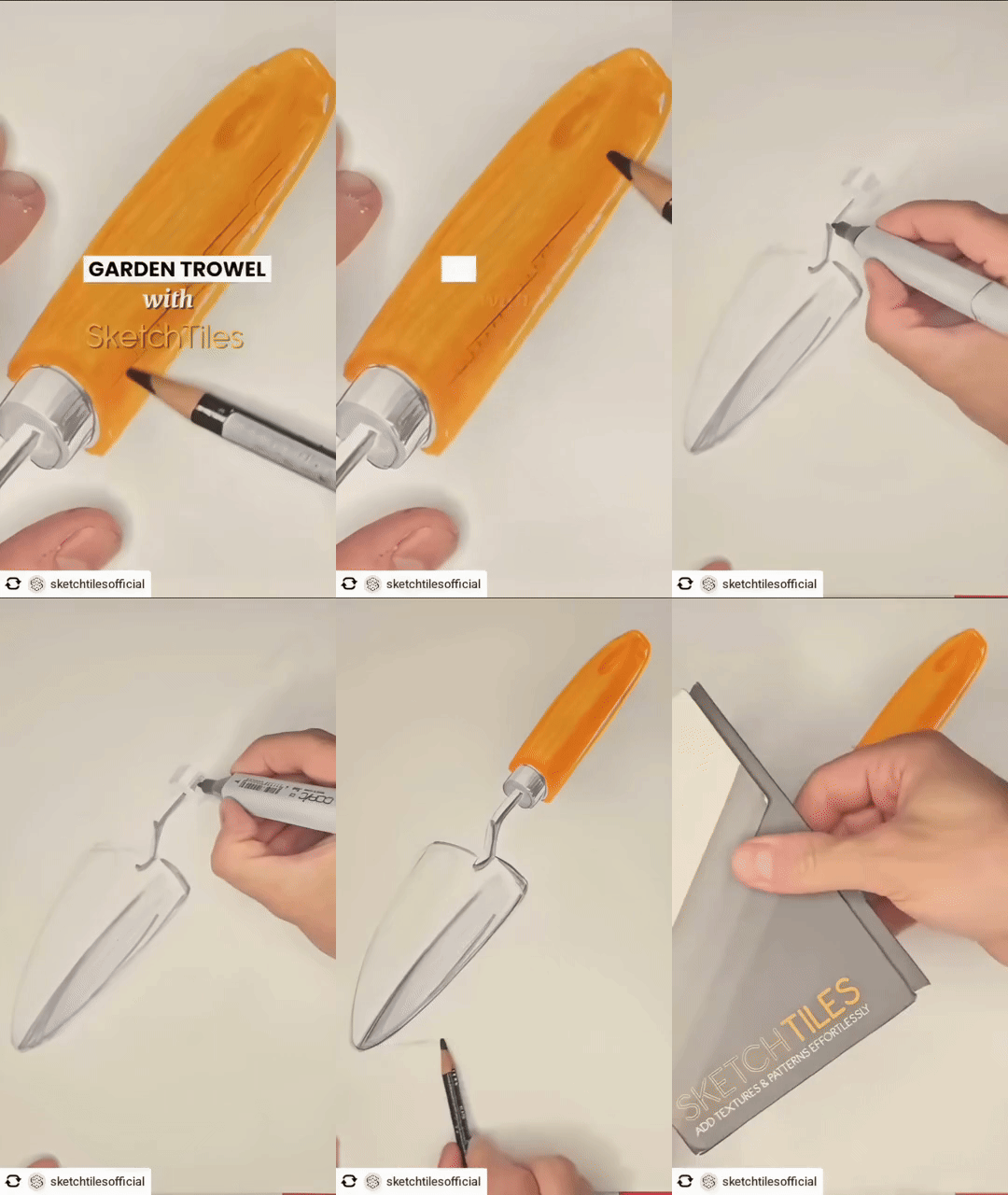
In this sketch, the Crosshatch tile provides the underlying structure for the wood. Instead of drawing every grain line, you use the tile to lay down a consistent, mechanical base.
This creates a visual shorthand. The crosshatch pattern mimics the way light catches the rough fibers of a turned wooden handle. It gives the object weight without requiring twenty minutes of hatching.
Suggestion over literalism
A good industrial design sketch doesn't need to be a photo. It needs to communicate intent. By using a tile, you ensure the texture is perfectly consistent across the entire surface of the trowel handle.
Consistency is what makes a material read as "real" to the viewer. When the spacing is perfect, the eye accepts it as a professional finish. You can then layer a few organic sweeps on top to finish the wood effect.
Where to use this
This technique works anywhere a natural material meets a hard tool. Use the crosshatch underlay for:
• Ash wood handles on hammers or axes.
• Cork grips on trekking poles.
• Woven wicker on outdoor furniture.
• Rough-sawn timber architectural elements.
• Textured composite grips on power tools.
Anywhere a repeated pattern defines the material.
Try this in your next sketch
Does your hand tension change the moment you move from the metal blade of a tool to the textured handle?
What are SketchTiles
SketchTiles are physical texture stencils built for designers, by designers. Place a tile under your page, trace with any pencil or marker, and the pattern transfers onto your sketch. Each set includes four double-sided tiles, etched with eight precise patterns: Diagonal Lines, Crosshatch, Isometric Dot Grid, and Hexagonal Grid.
SketchTiles are available as The Essentials Set and the Essentials Complete Set. Shop on Amazon.
SketchTiles are physical texture stencils built for designers, by designers. Place a tile under your page, trace with any pencil or marker, and the pattern transfers onto your sketch. Each set includes four double-sided tiles, etched with eight precise patterns: Diagonal Lines, Crosshatch, Isometric Dot Grid, and Hexagonal Grid.
SketchTiles are available as The Essentials Set and the Essentials Complete Set. Shop on Amazon.




Comments