Sketching a Lampshade: Crosshatch Texture for Light Diffusion
4 hours ago
2 min read
Most lighting sketches fall flat because they focus only on the silhouette. A lampshade is more than a cone; it is a surface that interacts with light. Without texture, it looks like cold plastic. With the wrong texture, it looks messy and distracts from the form.
Crosshatching by hand is a test of endurance that most designers lose. You start with tight, even strokes at the top of the shade. By the time you reach the bottom, your hand is tired. The spacing widens. The angles drift.
When the hatching is inconsistent, the viewer sees your struggle, not the material. For a lampshade to look believable, the texture must remain perfectly uniform across the entire surface. One stray line breaks the illusion of a woven or structured material.
Setting the structure with Crosshatch Tiles
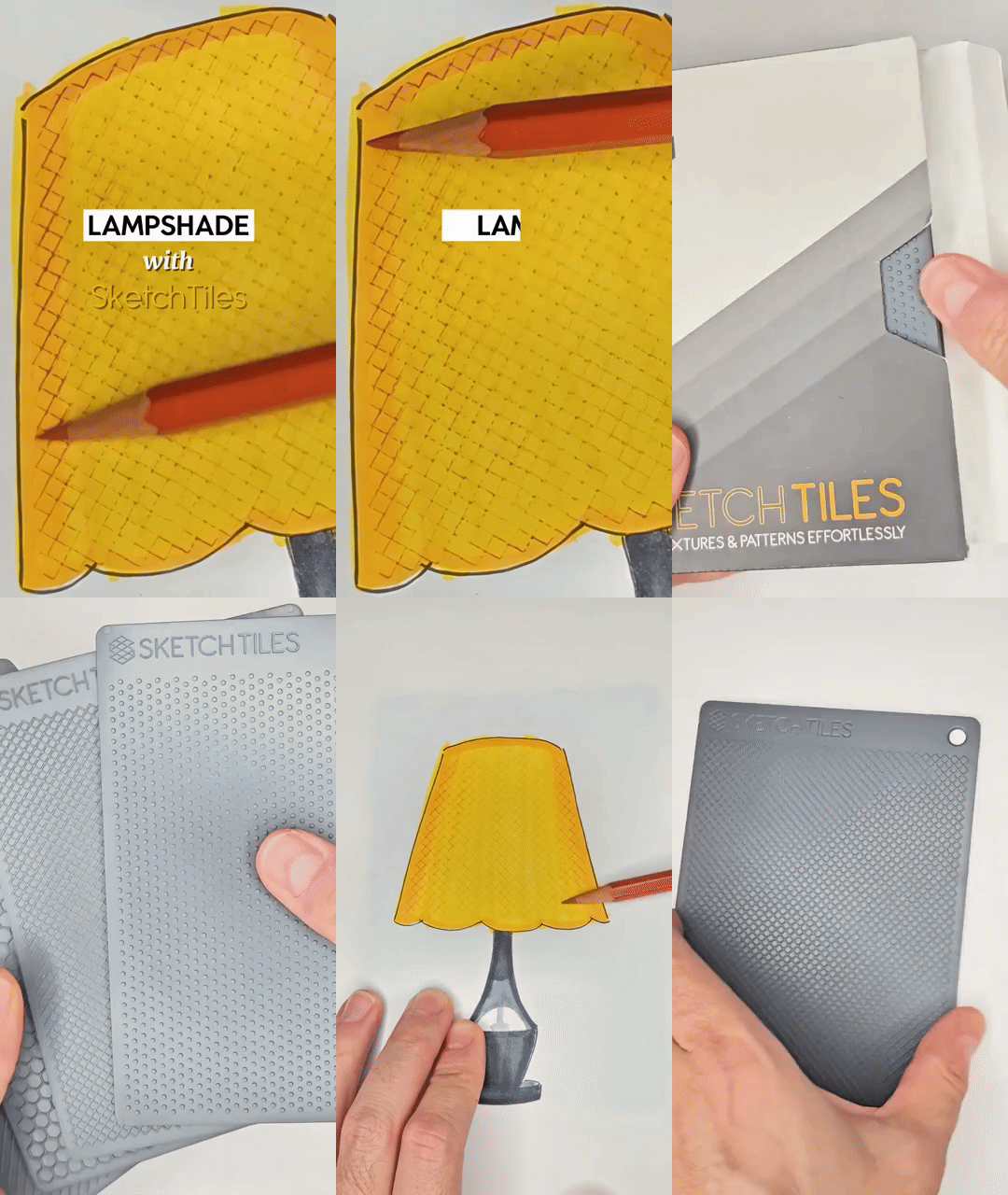
We used the Crosshatch Tile from the Essentials Set to solve this. By placing the tile under the paper before sketching the shade, the hard work of spacing is already done. You aren't guessing where the next line goes.
The tile provides a physical guide that keeps your stroke consistent. You focus on the pressure and the light source. The tile handles the geometry. This allows you to move quickly through the sketch while maintaining a professional level of detail.
Why consistency creates depth
In industrial design, the brain interprets repeated patterns as "material." If the crosshatch is clean, the shade gains a sense of warmth and structure. It feels like something that was manufactured, not just a doodle.
The depth comes from the contrast between the clean lines and your loose marker work. When the texture is rock-solid, you can afford to be messy with your shadows. The structure of the Crosshatch Tile holds the drawing together even if your color spills over the edges.
Where to use this
• Speaker grille covers for home audio.
• Non-slip grip patterns on handheld power tools.
• Carbon fiber weaves on automotive components.
• High-performance mesh on athletic footwear.
• Micro-textures on electronic interfaces.
• Anywhere a repeated pattern defines the material.
Try this in your next sketch
Does your texture density change when you move from the highlight to the core shadow?
What are SketchTiles
SketchTiles are physical texture stencils built for designers, by designers. Place a tile under your page, trace with any pencil or marker, and the pattern transfers onto your sketch. Each set includes four double-sided tiles, etched with eight precise patterns: Diagonal Lines, Crosshatch, Isometric Dot Grid, and Hexagonal Grid.
SketchTiles are available as The Essentials Set and the Essentials Complete Set. Shop on Amazon.




Comments